Writings
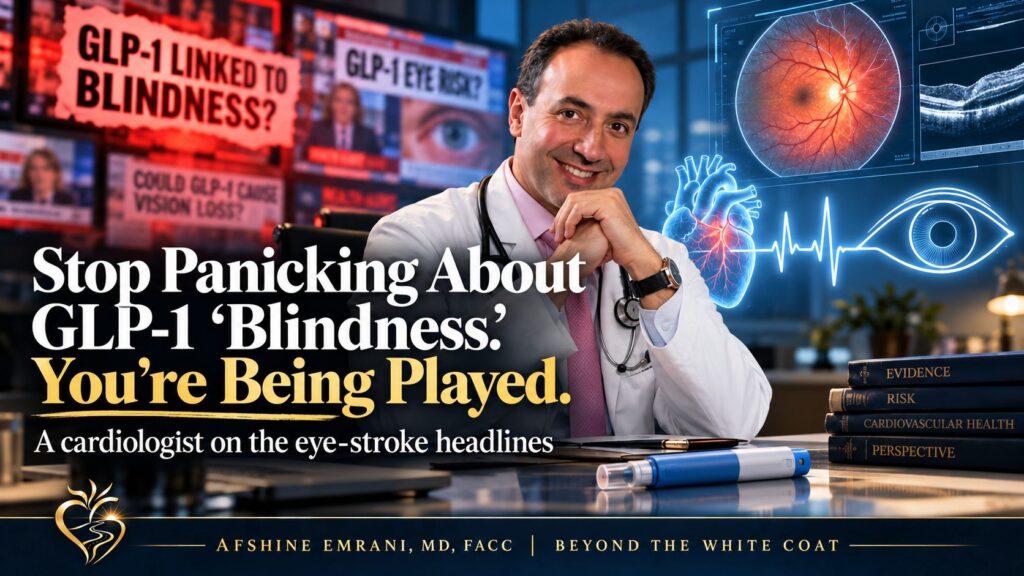
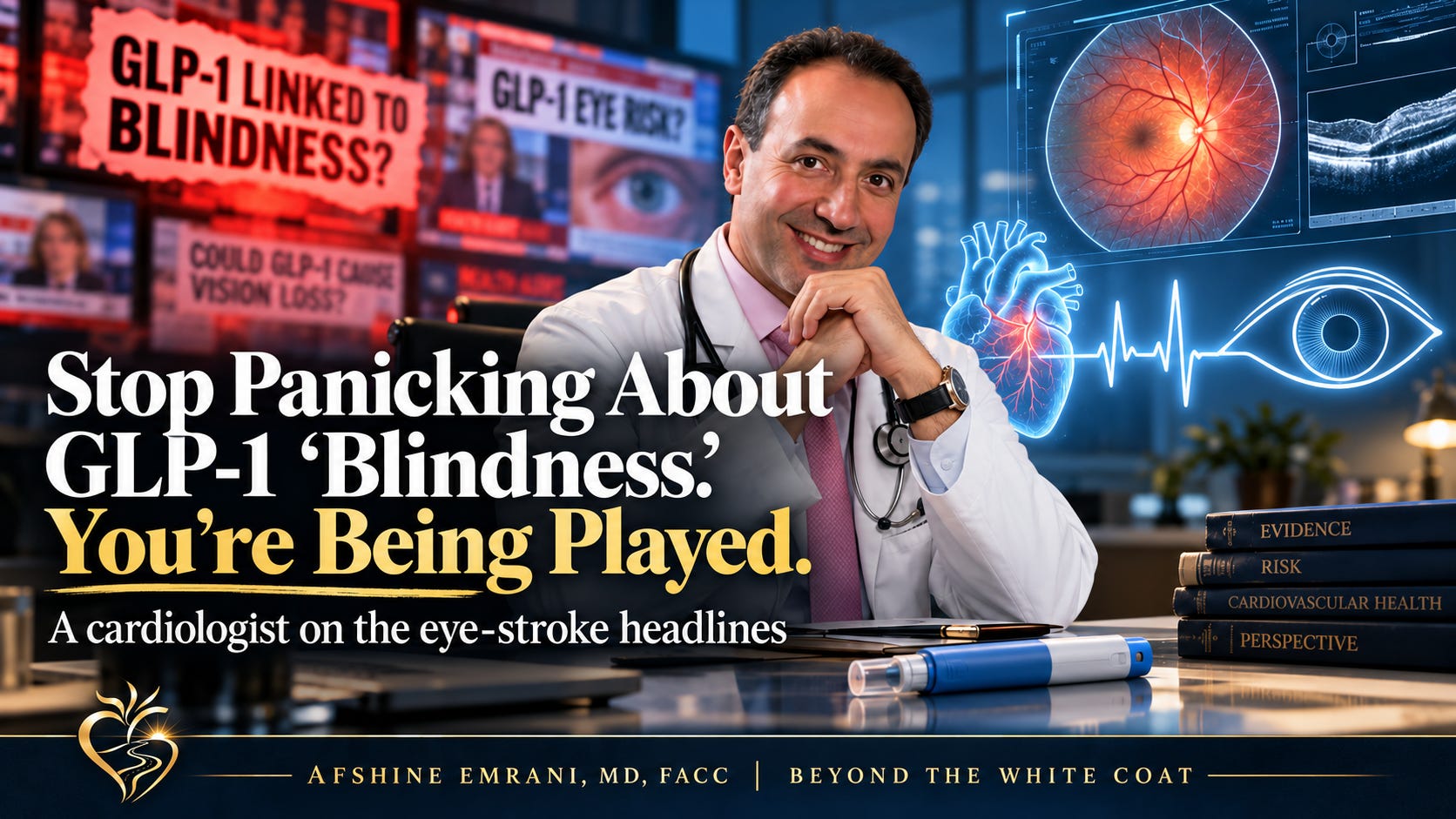
Stop Panicking About GLP-1 “Blindness.” You’re Being Played.
Originally published on Substack.
A woman called my office last week. She had lost 40 pounds. Her blood pressure was normal. Her prediabetes was gone. Then she read a headline, panicked, and quit her medication.
That headline did more damage to her health than the drug ever could.
I’m a cardiologist. I’ve spent more than two decades watching people die of the diseases these medications prevent. So let me say plainly what the fear machine won’t: the panic over GLP-1 vision loss is out of proportion to the evidence, and it is hurting people.
First, what’s real
I’m not going to insult you with spin.
There is a condition called NAION, a stroke of the optic nerve. It causes sudden, painless vision loss, usually in one eye. It’s serious. It existed long before any of these drugs. And yes, several studies have found an association with semaglutide. European and UK regulators now list it as a very rare side effect, up to about 1 in 10,000 people.
That’s the signal. Real, small, and still being studied.
Now let’s talk about what the headlines did with it.
“Double the risk” is the most abused phrase in medicine
A headline says the risk doubles. Your brain hears “50-50.” The math says something else entirely.
In the largest veterans study, the cumulative incidence was 0.29% on semaglutide versus 0.13% on the comparison drug, over roughly two years. That’s in older men with diabetes, about the highest-risk group you could pick. Regulators looking at everyone land at up to 1 in 10,000.
Double a tiny number is still a tiny number. That’s not science journalism. That’s a magic trick, and you are the audience.
The studies don’t even agree
Here’s what the fear merchants leave out. A study of more than 1.2 million patients found no increased risk. Another found only a modest bump, not much above the risk that diabetes carries by itself. The FDA has not mandated a Europe-style warning. It’s still investigating.
When top researchers using different methods get different answers, the honest word is unsettled. Not proven. Not settled. Not “GLP-1 blindness.”
And there’s a problem hiding in plain sight: the people taking these drugs are the people who already carry NAION’s known risk factors. Diabetes. Hypertension. Obesity. Sleep apnea. Separating the drug from the disease is hard, and nobody has fully done it.
Meanwhile, here’s what actually kills people
I don’t have the luxury of treating one rare risk in isolation. I treat the whole body.
Heart attack. Stroke. Heart failure. Diabetes. Fatty liver. Sleep apnea. In the SELECT trial, semaglutide cut major cardiovascular events by about 20 percent in people with obesity and established heart disease. Twenty percent fewer heart attacks and strokes. In my world, that’s not a lifestyle perk. That’s survival.
So when a patient quits because of a headline, she isn’t escaping risk. She is swapping a rare, uncertain one for a common, documented one. If I did that in clinic, it would be malpractice. When the media does it, it’s called engagement.
Follow the incentives
Ask who profits from your fear.
Outrage gets clicks. Terror sells subscriptions. Litigation advertising turns a “very rare” side effect into a pitch for your phone number. I’m not saying injured people don’t deserve answers; some do. I’m saying a billboard should never be the thing that talks you out of a medication that’s protecting your heart.
Your cardiologist, your prescriber, and your eye doctor know your history. A headline knows nothing about you.
What to actually do
-
Know the warning sign. Sudden, painless vision loss, or a shadow over part of one eye, is an emergency. Same-day eye exam. No waiting.
-
Tell your eye doctor what you take, and tell your prescriber about any eye history.
-
If you’ve already had NAION, have the individualized conversation. This is the one group where caution is the honest answer, and your doctors should guide it.
-
If you haven’t, don’t quit a working medication over a headline. Call the person who knows your numbers.
-
Fix what you can control. Blood pressure, glucose, and sleep apnea matter for your optic nerve with or without any drug.
The bottom line
Real signal. Tiny risk. Unsettled science. Enormous, documented benefit.
The leaders of ophthalmology said it themselves this month: the absolute risk remains very, very low, and it’s not a reason to stop. I agree, and I’d go further. The most predictable harm from this story is not blindness. It’s the heart attacks that happen because frightened people threw away protection.
Be informed. Be watchful. But don’t let anyone scare you into doing the math backwards.
Blessings.
Afshine Ash Emrani, M.D., F.A.C.C.
Assistant Clinical Professor, UCLA
David Geffen School of Medicine
Join Our new website
Castle-Connolly Nationwide Top Doctor (Since 2008)
Los Angeles Magazine Super Doctors (every year since 2013)
LA Style Magazine Top 100 Doctors in America (2024)
Subscribe to mynewsletter: substack.com/@afshineemrani
Explore my books: Amazon Author Profile