Writings
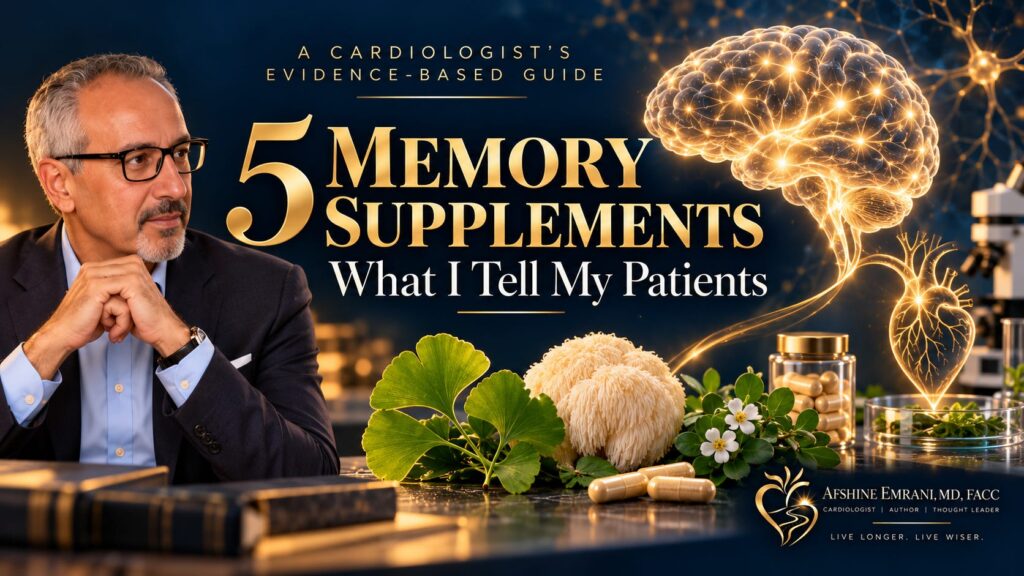
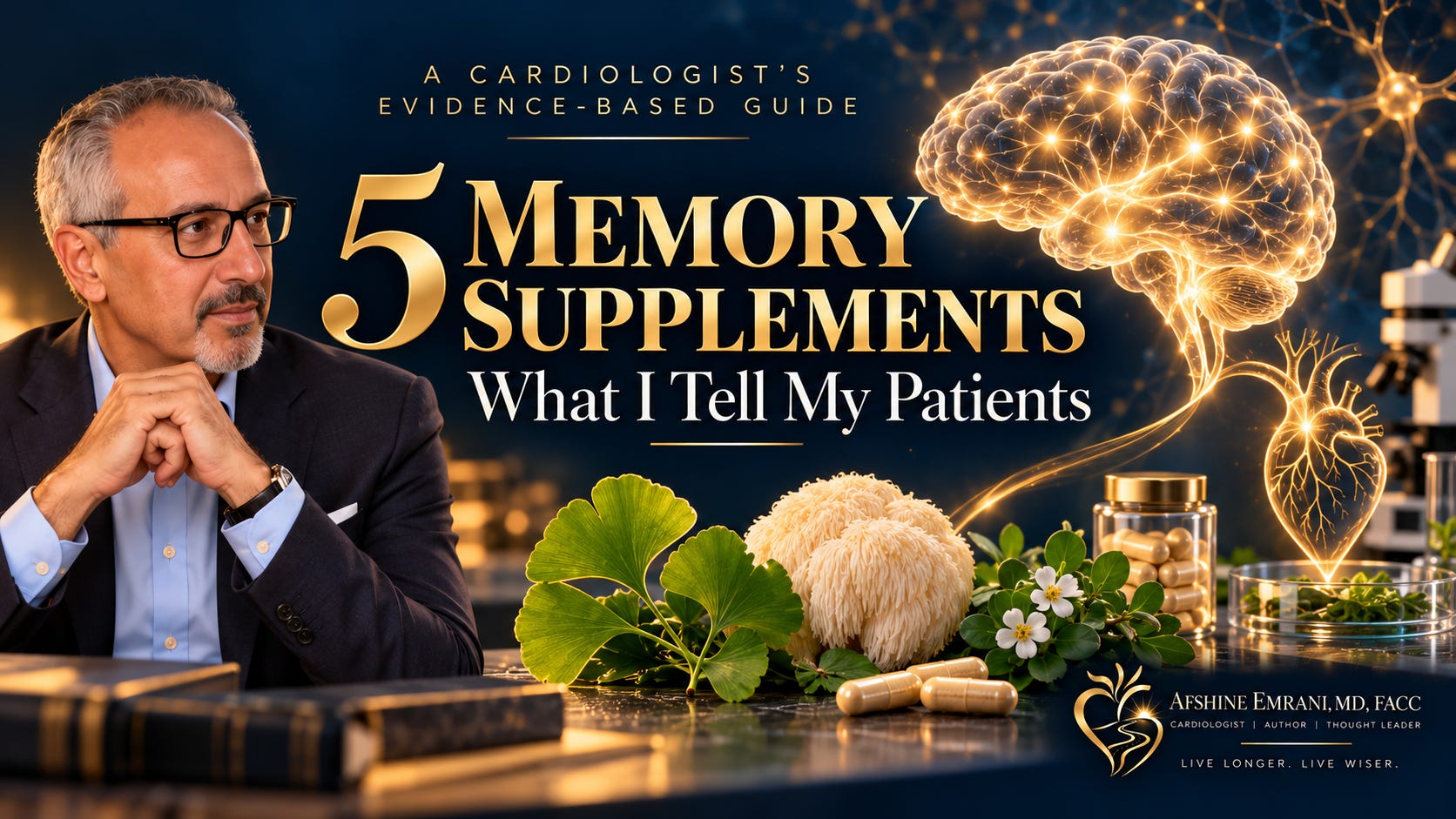
The 5 Memory Supplement Ingredients My Patients Keep Asking About (And What I Tell Them)
Originally published on Substack.
Almost every week, a patient sits across from me and says some version of the same thing: “Doctor, I’m forgetting names. I walk into a room and lose why I came. What should I take for my memory?”
Behind that question is something deeper than a supplement. It’s fear: the fear of becoming someone who doesn’t recognize the people they love. I take that fear seriously, and I think you deserve a straight answer rather than a marketing pitch.
Five ingredients show up in nearly every “memory formula” on the shelf. Here is what each one is, what the science actually says, and what a cardiologist wants you to know before you swallow it.
1. Alpha GPC
The pitch: Your body makes it naturally. It’s a precursor to acetylcholine, the neurotransmitter central to learning and memory, and it crosses the blood-brain barrier easily.
The reality: The biology is sound. Acetylcholine is exactly what declines in Alzheimer’s disease. Some European trials, mostly in people who already had cognitive impairment, showed modest benefit. But the evidence in healthy people is thin.
What concerns me: A large Korean analysis of older adults linked long-term alpha GPC use to a higher risk of stroke. It was observational, so it doesn’t prove cause, but it’s exactly the kind of signal I don’t want to ignore in a population already at vascular risk. If you have a history of stroke, atrial fibrillation, or uncontrolled blood pressure, talk to me before starting this one.
2. Huperzine A
The pitch: It blocks the enzyme (acetylcholinesterase) that breaks down acetylcholine, so more of it stays available.
The reality: This is the same mechanism as prescription drugs like donepezil. That’s the problem as well as the promise. Studies from China showed encouraging results, but when a rigorous US trial tested it in Alzheimer’s patients, it did not show a meaningful cognitive benefit.
What concerns me: Anything that raises acetylcholine can slow the heart. Huperzine A can cause nausea, cramping, and bradycardia, and the effect stacks if you take beta blockers, certain calcium channel blockers, or digoxin. It should never be combined with donepezil or similar medications. One more detail: huperzine A is extracted from Huperzia serrata, but the whole plant is not the same thing. Check the label for “huperzine A” specifically.
3. Lion’s Mane
The pitch: A mushroom with a centuries-long tradition among monks, said to stimulate nerve growth factor (NGF), a protein that helps neurons survive and regenerate.
The reality: This is the most fascinating one, and the most unfinished. The NGF findings come largely from cell and animal studies. In humans, one small Japanese trial in adults with mild cognitive impairment showed improvement that faded after they stopped taking it. That’s interesting, not conclusive.
What I tell patients: Its safety profile is excellent, and it’s a reasonable thing to try if you’re curious. Just hold your expectations at “promising,” not “proven.”
4. Bacopa Monnieri
The pitch: An Ayurvedic herb used for centuries to sharpen memory and focus.
The reality: Of the five, bacopa has the most consistent human evidence. Multiple trials and meta-analyses show improvements in memory retention and the speed of learning new information. The catch is patience: the benefits generally take about 12 weeks to appear. It is not a coffee-style jolt.
What to know: Stomach upset is common, so take it with food. Because it affects acetylcholine, it deserves the same caution as huperzine A if you have a slow heart rate or take heart-rate-lowering medications.
5. Ginkgo Biloba
The pitch: One of the oldest tree species on Earth, with a long history in Chinese medicine and a reputation for improving blood flow to the brain.
The reality: Here I have to be the honest friend. Ginkgo is the most heavily studied herbal memory supplement in history, and the results have been disappointing. The largest trial, following over 3,000 older adults for years, found that ginkgo did not reduce the rate of dementia or slow cognitive decline.
What concerns me: Ginkgo can increase bleeding risk. If you take warfarin, a DOAC like Eliquis or Xarelto, aspirin, or Plavix, the combination deserves a conversation with your doctor first. This is one of the most common supplement-drug interactions I see in my practice.
The Truth Nobody Sells in a Bottle
Here is what thirty years of cardiology have taught me: what’s good for your heart is good for your brain. The same vessels that feed your heart feed your memory. The strongest evidence we have for protecting cognition isn’t in a capsule:
-
Control your blood pressure. Hypertension in midlife is one of the strongest modifiable risk factors for later dementia.
-
Move your body. Regular aerobic exercise improves blood flow to the brain and is associated with a larger hippocampus, the seat of memory.
-
Protect your sleep. Deep sleep is when the brain clears metabolic waste. Untreated sleep apnea is a serious, underdiagnosed threat to both heart and mind.
-
Eat a Mediterranean-style diet. Vegetables, olive oil, fish, nuts, and less ultra-processed food.
-
Treat hearing loss. It’s one of the largest modifiable dementia risk factors, and it’s routinely overlooked.
-
Stay connected. Loneliness is a measurable risk factor. Conversation is cognitive exercise.
If you want to add a supplement on top of that foundation, bacopa and lion’s mane have the best case for a safe trial. But a supplement is a supporting actor, not the lead.
Before You Start Anything
-
Bring the actual bottle to your doctor or pharmacist. Ingredient doses vary wildly between brands.
-
Tell us about every medication you take, especially blood thinners, beta blockers, and heart rhythm drugs.
-
Choose products that carry third-party testing (USP, NSF, or ConsumerLab). Supplements are not FDA-reviewed for effectiveness before they’re sold.
-
Give it a fair trial, then reassess. If nothing has changed in three months, it’s not working. Don’t keep paying for hope.
-
If memory loss is new, progressive, or frightening you, don’t self-treat. Get evaluated. Thyroid disease, B12 deficiency, depression, sleep apnea, and medication side effects can all mimic dementia, and many are fixable.
Your memory is made of everything you’ve loved and lived. It deserves more than a bottle off the shelf. It deserves a plan.
Blessings.
Afshine Ash Emrani, M.D., F.A.C.C.
Assistant Clinical Professor, UCLA
David Geffen School of Medicine
Join Our new website
Castle-Connolly Nationwide Top Doctor (Since 2008)
Los Angeles Magazine Super Doctors (every year since 2013)
LA Style Magazine Top 100 Doctors in America (2024)
Subscribe to mynewsletter: substack.com/@afshineemrani
Explore my books: Amazon Author Profile