Writings
Stop Guessing! Check Your 4 Pillars of Health.
Originally published on Substack.
Most people do not have a health plan.
They have a reaction plan.
They wait for fatigue to become unbearable, high blood pressure to become dangerous, bone loss to become a fracture, or metabolic dysfunction to become diabetes.
But disease rarely begins on the day it is diagnosed.
It develops quietly—in worsening sleep, lost muscle, declining fitness, rising blood pressure, expanding waistlines, and laboratory changes we overlook because we still “feel fine.”
Health optimization is not about chasing every new supplement or ordering hundreds of exotic tests.
It is about noticing meaningful change early enough to act.
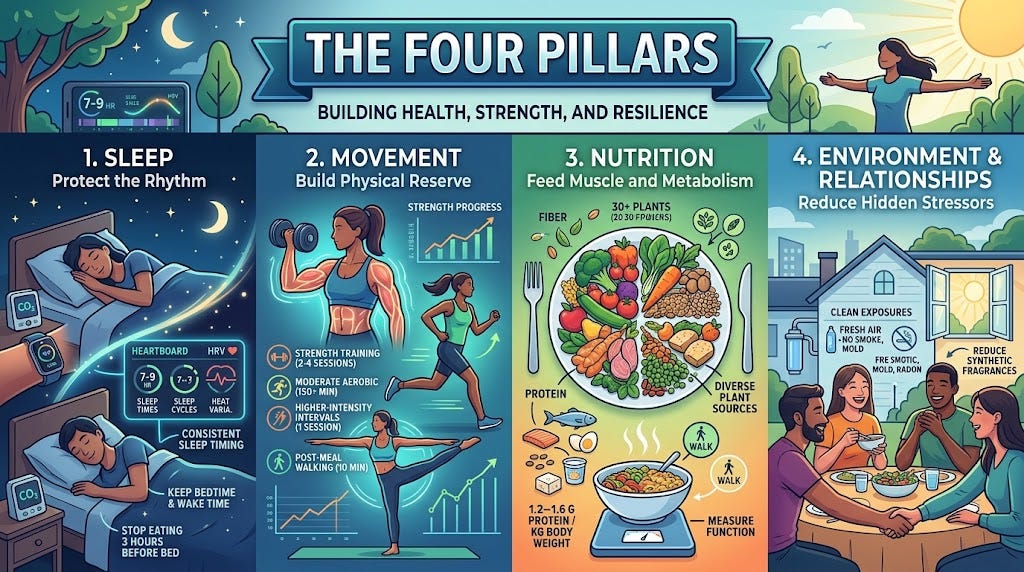
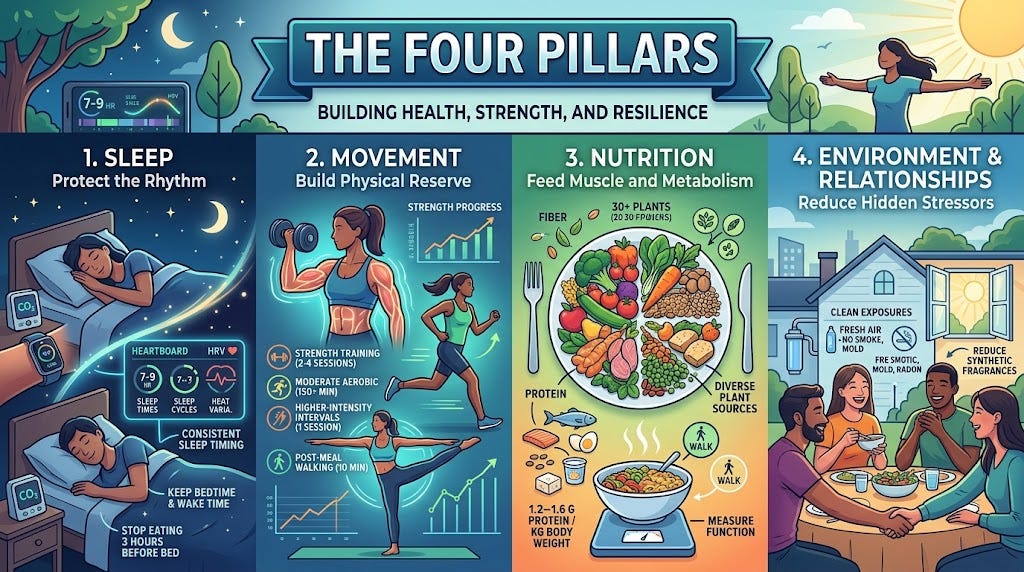
THE FOUR PILLARS
1. Sleep: Protect the Rhythm
Do not track only how long you sleep. Track how regularly you sleep.
Research using objective wearable data suggests that consistent sleep timing may predict long-term health more strongly than sleep duration alone. Read the study.
Your sleep targets
-
Sleep approximately 7–9 hours.
-
Keep bedtime and wake time within the same 30–60-minute window.
-
Stop eating about three hours before bed.
-
Minimize or eliminate alcohol.
-
Keep the bedroom dark, quiet, cool, and well ventilated.
-
Seek evaluation for heavy snoring, witnessed pauses in breathing, morning headaches, or persistent daytime exhaustion.
Measure your bedroom—not just your body
A CO₂ monitor can reveal poor overnight ventilation. Small studies suggest that improved ventilation may improve aspects of sleep quality, although the evidence is still emerging. Bedroom ventilation study.
If CO₂ rises significantly overnight, consider improving ventilation when weather, outdoor air quality, and security allow.
Look at wearable trends over weeks—not one bad night.
Your resting heart rate and HRV are most useful when compared with your own baseline. A sustained change may reflect illness, stress, alcohol, poor recovery, dehydration, or overtraining.
2. Movement: Build Physical Reserve
Muscle is not merely cosmetic.
It is metabolic protection, glucose disposal capacity, skeletal support, fall prevention, and the reserve that helps you survive illness without losing your independence.
Your weekly movement prescription
ActivityPractical targetStrength training2–4 sessionsModerate aerobic exercise150+ minutesHigher-intensity intervals1 session, if appropriatePost-meal walking10 minutes after mealsBalance and mobility2–3 short sessionsDaily outdoor movementEvery day
Adults should complete at least 150 minutes of moderate activity—or 75 minutes of vigorous activity—plus strength training at least twice weekly. CDC guidelines.
Train the movements that preserve independence
-
Squat or sit-to-stand
-
Hinge
-
Push
-
Pull
-
Carry
-
Balance
-
Core stabilization
“Lift heavy” should mean challenging for you—not reckless. Increase weight, repetitions, or control gradually.
Measure function, not just weight
Track:
-
Grip strength
-
Walking speed
-
Chair-rise ability
-
Balance
-
Strength-training loads
-
Waist circumference
-
Estimated or measured VO₂ max
The scale cannot tell you whether you are gaining muscle, losing bone, or becoming more capable.
3. Nutrition: Feed Muscle and Metabolism
Eat enough protein—but do not worship a formula
“One gram per pound of goal weight” is not a universal requirement.
For many active and older adults, approximately 1.2–1.6 grams of protein per kilogram of healthy or target body weight per day is a practical range. Some athletes may need more; people with kidney disease or certain medical conditions may require individualized guidance.
For a target weight of 150 pounds, that equals roughly 82–109 grams daily, not automatically 150 grams.
Distribute protein throughout the day and prioritize:
-
Fish
-
Eggs
-
Yogurt and cottage cheese
-
Poultry
-
Beans and lentils
-
Tofu and tempeh
-
Lean meats
-
Protein powder when food alone is impractical
Eat the rainbow—and count diversity
Aim for:
-
25–35 grams of fiber daily
-
30 or more different plant foods weekly
-
Mostly minimally processed foods
-
Healthy fats from olive oil, nuts, seeds, avocado, and fish
“Thirty plants” is a useful behavioral target, not a biological law. Vegetables, fruits, beans, whole grains, nuts, seeds, herbs, and spices all count.
Walk after meals
A ten-minute walk after eating is one of the simplest metabolic interventions available. Light post-meal walking can reduce glucose and insulin exposure compared with remaining seated. Systematic review.
Finish eating. Put on your shoes. Walk.
4. Environment and Relationships: Reduce Hidden Stressors
Go outdoors early
Morning outdoor light helps anchor your circadian rhythm. You do not need to stare at the sun or damage your skin.
Go outside shortly after waking when possible. Walk, drink your coffee outdoors, or spend several minutes in natural daylight.
Sunlight through glass does not meaningfully produce vitamin D in the skin because windows block ultraviolet B. Use sensible skin protection during prolonged exposure. NIH vitamin D guidance.
Clean up repeated exposures
-
Review your municipal water-quality report.
-
Test private well water appropriately.
-
Choose a certified filter for the specific contaminant involved.
-
Store hot, oily, and acidic foods in glass or stainless steel.
-
Avoid heating food in plastic when possible.
-
Reduce synthetic fragrances if they provoke headaches, respiratory symptoms, or skin irritation.
-
Address smoke, mold, radon, carbon monoxide, and poor indoor ventilation.
Do not let avoiding “toxins” become its own source of fear. Dose and duration matter.
Protect close relationships
Loneliness, chronic conflict, grief, and isolation influence sleep, activity, nutrition, mental health, and the desire to care for ourselves.
Protect relationships as seriously as laboratory results:
-
Call the person you keep meaning to call.
-
Eat with people you love.
-
Apologize sooner.
-
Ask better questions.
-
Put the phone away.
-
Build friendships before you desperately need them.
A perfect laboratory panel cannot hold your hand in a hospital room.
WHAT SHOULD YOU ACTUALLY TEST?
The answer is not “everything every three months.”
Testing without purpose can produce false alarms, anxiety, unnecessary procedures, and expense. Every test should answer a question or change a decision.
A sensible health dashboard
CategoryWhat to considerTimingBlood pressureValidated home upper-arm cuffPeriodically; more often if elevatedMetabolic healthFasting glucose and/or A1cBased on age and riskCholesterolLipid panelBased on baseline risk and treatmentInherited cardiac riskLp(a)At least once in adulthoodParticle-related riskApoBWhen it adds useful informationGeneral baselineCBC and metabolic panelAs clinically appropriateKidney healthCreatinine/eGFR; urine albumin when indicatedBased on riskThyroidTSH, with additional testing if appropriateWhen symptoms or risk justify itBody compositionWaist, strength, and possibly DEXABased on goals and riskBone healthDEXA bone-density testingAge- and risk-dependentSleepSleep-apnea testingWhen symptoms or risk are presentCancer preventionEvidence-based screeningBy age, anatomy, history, and risk
The tests people often miss
Lipoprotein(a)
Lp(a) is a largely inherited cardiovascular risk factor that does not appear on a standard cholesterol panel.
Because it generally remains stable, most adults need it checked only once. The 2026 ACC/AHA dyslipidemia guideline recommends at least one measurement during adulthood. ACC guideline summary.
If elevated, it does not mean you are doomed. It means the risks you can modify—LDL cholesterol, blood pressure, smoking, exercise, weight, and glucose—deserve greater attention.
ApoB
ApoB estimates the number of cholesterol-carrying particles capable of entering artery walls.
It can be especially helpful when:
-
Triglycerides are elevated
-
Diabetes or metabolic dysfunction is present
-
LDL cholesterol and other risk markers disagree
-
Cardiovascular disease is already present
-
The treatment decision remains uncertain
Fasting insulin
Fasting insulin can sometimes identify compensatory hyperinsulinemia before glucose becomes clearly abnormal. But it is not sufficiently standardized to diagnose diabetes by itself.
Interpret it alongside:
-
Waist circumference
-
Blood pressure
-
Triglycerides and HDL
-
Fasting glucose
-
A1c
-
Family history
-
Activity level
-
Body composition
The American Diabetes Association uses A1c, fasting glucose, oral glucose-tolerance testing, and random glucose in appropriate circumstances for diagnosing diabetes—not fasting insulin alone. ADA diagnostic criteria.
DEXA
A DEXA scan can evaluate bone density and estimate lean and fat mass.
Bone-density screening is recommended for women 65 and older and for younger postmenopausal women at increased fracture risk. Earlier testing may be appropriate with fragility fractures, prolonged steroid exposure, early menopause, very low weight, significant height loss, or other risk factors. USPSTF guidance.
SHOULD YOU GET LABS EVERY THREE MONTHS?
Not automatically.
Quarterly testing may make sense when:
-
A medication was started or changed
-
An abnormal result is being followed
-
Diabetes, kidney, liver, thyroid, or blood disorders require monitoring
-
A targeted intervention is being assessed
-
Your clinician recommends it for a specific reason
A healthy person with stable results may need many tests annually—or less often.
Test frequently enough to guide action, but not so frequently that normal biological variation becomes a new diagnosis.
And do not chase exotic biomarkers while neglecting proven screening:
-
Blood pressure
-
Cholesterol
-
Diabetes
-
Colorectal cancer beginning at age 45 for average-risk adults
-
Breast, cervical, prostate, lung, and skin evaluation when appropriate
-
Bone density when indicated
-
Dental and vision care
-
Vaccinations
No longevity panel compensates for missing a dangerous blood pressure or an overdue cancer screening.
WOMEN: USE THE CYCLE AS INFORMATION
For menstruating women, the menstrual cycle can provide valuable information about reproductive health, energy availability, endocrine function, stress, and perimenopause.
Track:
-
Cycle length
-
Bleeding pattern
-
Pain
-
Missed periods
-
Major changes from your usual pattern
-
Ovulation indicators when useful
Ovulation tracking can help with fertility planning and irregular-cycle evaluation, but it is not necessary for every woman every month.
Very heavy bleeding, severe pain, prolonged absence of periods, major cycle changes, or bleeding after menopause deserves proper evaluation.
OPTIONAL—not Foundational
Sauna and cold exposure can be useful, enjoyable tools. They are not replacements for sleep, exercise, nutrition, and risk-factor control.
Observational studies associate frequent sauna use with favorable cardiovascular outcomes, but randomized evidence has not consistently demonstrated improvements across most cardiometabolic markers. Review of randomized trials.
Use heat carefully if you have low blood pressure, dehydration, pregnancy, unstable cardiovascular disease, or take medications affecting fluid balance.
Cold exposure is also optional. If building muscle is the priority, avoid intense cold-water immersion immediately after every strength session because it may interfere with some training adaptations.
THE ONE-PAGE LONGEVITY BLUEPRINT
Every day
-
Get outdoor light early.
-
Move throughout the day.
-
Eat adequate protein.
-
Eat plants and fiber.
-
Walk after meals.
-
Avoid tobacco.
-
Minimize or eliminate alcohol.
-
Finish dinner about three hours before bed.
-
Keep a consistent sleep schedule.
-
Connect meaningfully with another person.
Every week
-
Strength-train 2–4 times.
-
Complete 150+ minutes of aerobic activity.
-
Add one interval session if appropriate.
-
Include balance and mobility work.
-
Spend meaningful time in nature.
-
Review trends in sleep, HRV, resting heart rate, and activity.
Periodically
-
Measure home blood pressure.
-
Track waist circumference and strength.
-
Review medications and supplements.
-
Reassess mood, sleep, and exercise capacity.
-
Complete evidence-based screening.
Once—or when indicated
-
Measure Lp(a).
-
Establish a rational laboratory baseline.
-
Consider ApoB, fasting insulin, DEXA, or sleep testing when the result would change your plan.
-
Learn your family history.
-
Evaluate meaningful environmental risks.
The Real Goal
Health optimization is not the pursuit of perfect numbers.
It is the creation of reserve:
Enough cardiovascular reserve to climb stairs without fear.
Enough muscular reserve to survive an illness.
Enough skeletal reserve to withstand a fall.
Enough metabolic reserve to tolerate an imperfect meal.
Enough emotional reserve to endure a difficult season.
Enough human connection to remember why longevity matters.
Do not test everything because you are afraid.
Test what matters so you can act.
Do not track every heartbeat because you believe death can be negotiated away.
Track the patterns that help you live more deliberately.
And do not wait for your body to scream before you begin listening to what it has been whispering for years.
Blessings.
Afshine Ash Emrani, M.D., F.A.C.C.
Assistant Clinical Professor, UCLA
David Geffen School of Medicine
Join Our new website
Castle-Connolly Nationwide Top Doctor (Since 2008)
Los Angeles Magazine Super Doctor (Since 2010)
LA Style Magazine Top 100 Doctors in America (2024)
Subscribe to mynewsletter: substack.com/@afshineemrani
Explore my books: Amazon Author Profile