Writings
Bill Ackman Had Nineteen Hours to Lose a Daughter. He Built a Brain Institute Instead.
Originally published on Substack.
The doorbell rang at midnight. A security guard handed Bill Ackman a phone. His eldest daughter, Eloise, had found her twenty-six-year-old sister Lucy unconscious on the floor of her Williamsburg apartment and called 911.
By 2:30 a.m., a CT scan showed a massive brain hemorrhage. Surgery to evacuate the blood and remove a section of skull — a hemicraniectomy, so the swelling brain has somewhere to go besides down through the base of the skull, which is the direction that kills you — began at 3:15 a.m. and ended at 5:30.
Lucy’s Oura ring later revealed when her physiology had fallen off a cliff: roughly 9 a.m. the previous morning. More than nineteen hours had passed between the bleed and the end of the operation.
Ackman writes that he was told afterward the standard teaching is not to operate on a large hemorrhage that far out — that beyond about five hours the damage is presumed done, and the likeliest purchase is a few months in a nursing home before pneumonia finishes it. [1]
I want to be careful with that number, because it is the hinge of the whole story. It is not a formal guideline you will find in a consensus document. It is the kind of thing an exhausted surgeon says at 3 a.m. — a rule of thumb distilled from a great many patients who did not do well. And rules of thumb are not cruelty or laziness. They exist because we must act under uncertainty, and a rule is better than a coin.
But a rule built from averages tells you what usually happens. It does not tell you what is possible. And no average has ever met the specific patient on the gurney.
They operated anyway. She lived.
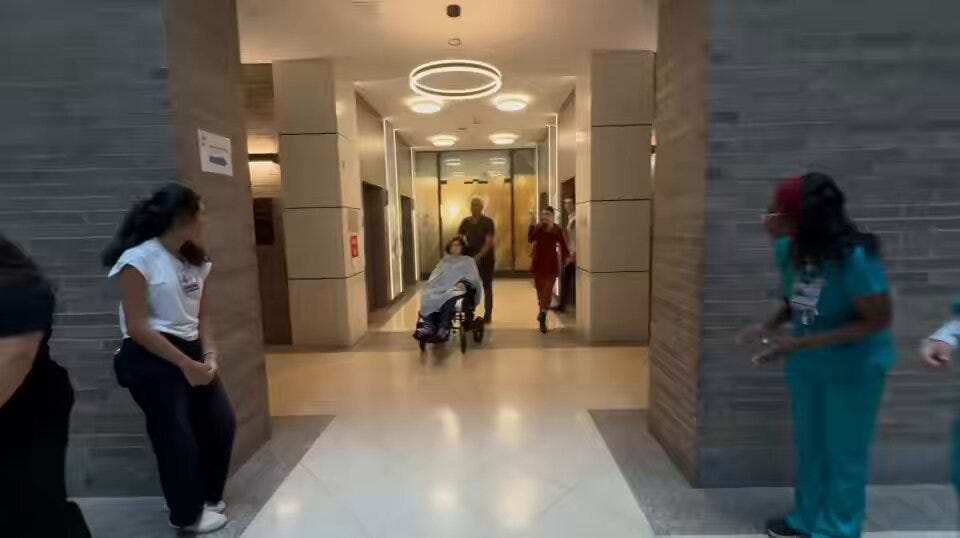
<div class="twitter-embed" data-attrs="{"url":"https://x.com/BillAckman/status/2090198220592787569?s=20","full_text":"Lucy’s last day at @MountSinaiNYC after six months in the hospital. ","username":"BillAckman","name":"Bill Ackman","profile_image_url":"https://pbs.substack.com/profile_images/1619837521059348481/9UeNLFmD_normal.jpg","date":"2026-08-19T22:04:24.000Z","photos":[{"img_url":"https://substackcdn.com/image/fetch/$s_!M9Me!,w_1028,c_limit,f_auto,q_auto:best,fl_progressive:steep/l_play_button_usfui2,w_88,e_colorize:0/https%3A%2F%2Fsubstack-post-media.s3.amazonaws.com%2Fpublic%2Fimages%2F__ss-rehost__tw-video-preview-13_2090198171842437120.jpg","link_url":"https://t.co/FNqYCzgRPh"}],"quoted_tweet":{},"reply_count":769,"retweet_count":658,"like_count":24624,"impression_count":1000181,"expanded_url":null,"video_url":"https://video.twimg.com/amplify_video/2090198171842437120/vid/avc1/960×538/mXruz5RXvELbFF2W.mp4","video_preview_media_key":"13_2090198171842437120","belowTheFold":false}” data-component-name=”Twitter2ToDOM”>
What “she lived” actually looked like
Lucy spent weeks in a coma. When she woke, she could not breathe on her own, walk, speak, or see. Her pupils no longer reacted to light.
The blindness did not come from the blood. During those nineteen hours, prolonged hypoperfusion starved her optic nerves and her retinal ganglion cells — the neurons that carry vision to the brain. By eight weeks the nerves showed frank atrophy. At three months, nothing had improved. [2]
Six months later the picture was different, if still unfinished. Cognition had returned; she understands everything, including, unbearably, her own circumstance. She can walk more than a hundred steps with help. Sounds, vowels, consonants, and the first fragments of speech are appearing. [3]
Vision has not.
Her father tells her the same thing every day: make a little progress today. Daily progress compounds.
That is a hedge fund manager’s sentence, and it is also, precisely, the physiology of neurorehabilitation. The brain does not heal the way a cut heals. It rewires. Surviving circuits take over abandoned jobs, slowly, through relentless repetition, and the curve is not linear — it is exponential in the way compound interest is exponential, which is to say invisible for a long time and then suddenly not.
I have watched families lose faith in month three because they were measuring in days. The ones who make it measure in years.
The ancient organelle
Here is where the story becomes something I did not expect to be writing about in 2026.
Imaging showed something that mattered enormously: the retinal nerve fiber layer and the ganglion cells had not entirely vanished, and some visual signal was still, faintly, reaching the visual cortex. [2]
The cells were not dead. They were starving.
Retinal ganglion cells are among the most metabolically greedy neurons in the body. They run almost entirely on oxidative phosphorylation. They are, functionally, mitochondria with axons attached. When a cell that hungry is injured, the first thing to fail is its power plant.
So the Mount Sinai team asked a question that is either obvious or insane depending on which decade you trained in: what if we gave the cells new batteries?
Under FDA emergency expanded access, a team led by rehabilitation neuroscientist David Putrino and neurosurgeon Christopher Kellner isolated mitochondria from a small piece of Lucy’s own leg muscle and injected them into the vitreous fluid of each eye, twenty-four hours apart. [4]
Mitochondria are the cell’s power plants — descendants of free-living bacteria that took up residence inside our single-celled ancestors more than a billion years ago. Damaged neurons can take up healthy ones from outside. In rodents, mitochondria delivered into the vitreous after optic-nerve injury are absorbed by exactly these cells and improve their survival. [2]
This was the first time it had been attempted in a human eye. It had already been done in the human heart and, more recently, the human brain — but for the eye there was no dose, no safety profile, and no delivery experience at all. [2] The report is a preprint, posted August 10, not yet peer reviewed. [5] The authors were explicit that they were testing safety, not claiming a cure. “We can’t prove efficacy at all, nor are we trying to,” Putrino said.
Neither eye developed inflammation. Pupillary reactivity — absent across all forty-five pre-treatment readings over seventy-one days — returned in each eye within days. [6] The responses held above pre-transplant levels, and on low-vision assessment she was perceiving shapes and shadows in her left eye. [4]
Then it faded. The left eye recorded its last normal response on day 11; the right kept producing sporadic normal responses until day 39. Her measured visual acuity did not change. [6]
Separately, writing publicly, her father has said the family has seen a sustained though weaker benefit since the first injection, and that they are working toward giving the injections more frequently. [1] That is his account, not the paper’s, and the two are worth keeping straight.
The honest part
I am going to be blunt, because this is the section where most people writing about this story will fail you.
This is one patient. There was no control group. There was no microscopy and no biopsy — no direct evidence that the transplanted mitochondria ever actually entered her retinal ganglion cells rather than sitting inert in the vitreous. [6] The authors say plainly that a single case cannot establish causation, and the report remains preliminary pending peer review. [5] An independent mitochondrial biologist in Basel called the procedure relatively safe while noting it does not confirm any therapeutic effect. [4]
Safety, not cure. That is the correct reading, and anyone who tells you otherwise is selling something.
Now let me tell you why the fade is the most interesting part rather than the disappointing part.
The fade is exactly what the bench work predicts. Donor mitochondria are internalized by recipient cells within hours and largely cleared over the following days. In transplanted cardiomyocytes, respiration and ATP production climb by day two and drift back toward baseline afterward. [7] In retinal ganglion precursor cells, donor mitochondria are inside by three hours and already declining by twenty-four. [8]
A transient effect that decays over weeks is therefore not a refuted hypothesis. It is a dose-duration problem. The batteries worked and then ran down — a different and far more tractable problem than batteries that never worked at all.
And the field has already begun solving it. One group more than tripled how long donor mitochondria survived inside retinal cells simply by priming those cells with moderate oxidative stress beforehand. [8] In April, Botond Roska’s group in Basel published a system in Nature they call MitoCatch, using engineered protein binders to aim donor mitochondria at chosen cell types. It delivered mitochondria into neurons and retinal, cardiac, endothelial, and immune cells, where the transplanted organelles stayed functional — moving, fusing, dividing. Optic nerve atrophy is named among its intended targets. [9] [10]
Targeting. Retention. Redosing. Those are engineering problems, and medicine is very good at engineering problems once it decides a thing is worth engineering.
Why a cardiologist is telling you this
Because it did not start in the eye. It started in the heart.
The first human mitochondrial transplants were performed in Boston, in children, during cardiac surgery — myocardium stunned after ischemia and reperfusion. [11] Same logic exactly. The muscle is not dead, it is de-powered; restore the power plant and you may recover tissue the textbook had already written off.
I have spent twenty-five years standing in front of hearts the numbers said were finished. Ejection fraction of fifteen. Scar on the MRI. Guidelines pointing gently toward hospice. And I have watched enough of those hearts come back — with time, with relentless therapy, with a patient who refused to be a statistic — to have developed a permanent professional suspicion of the word irreversible.
Irreversible usually means we do not currently know how yet. Those are not the same sentence. We say the first one because it is shorter.
From one life to an institute
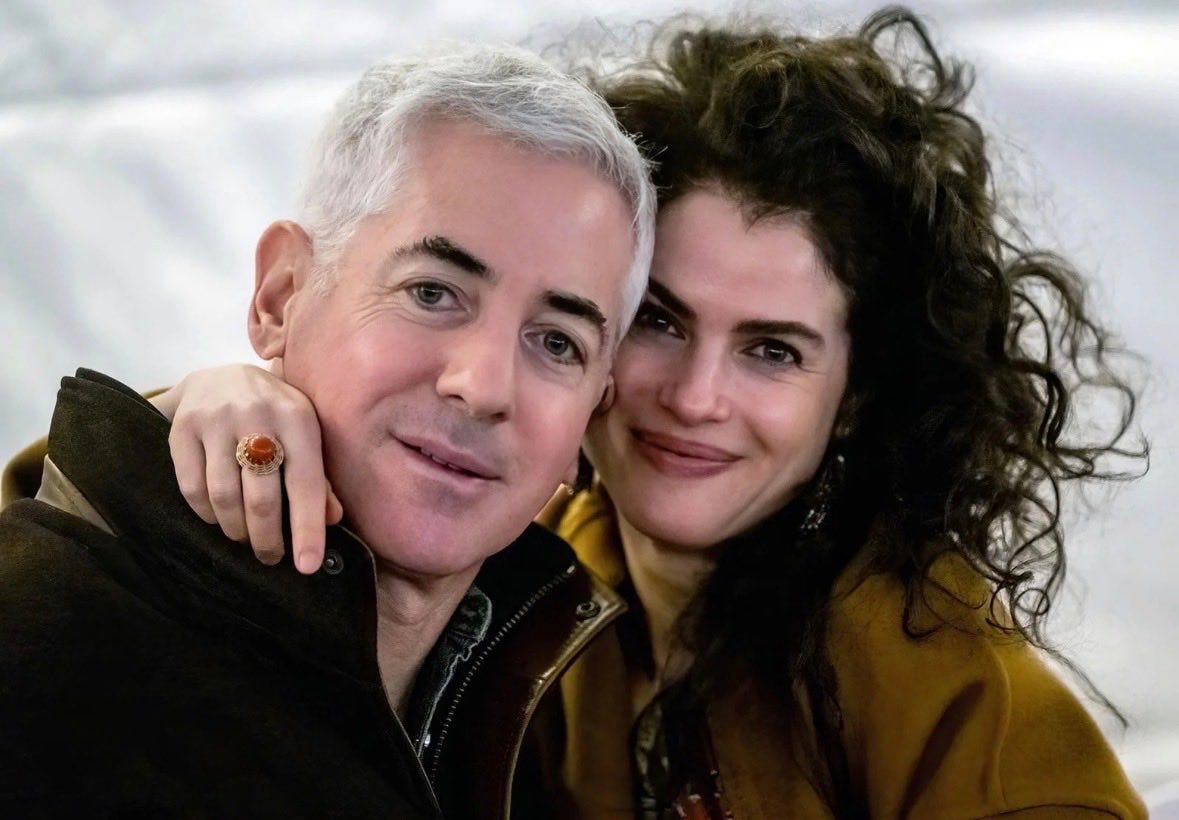
Ackman had told Lucy’s doctors something simple at the beginning: give her the best care possible, he would invest unlimited resources, and whatever they learned would be shared with everyone.
On August 19 he announced that he and his wife, the designer Neri Oxman, are donating roughly $400 million in Pershing Square stock — ten million shares — to anchor a new institute, with a second gift of similar or potentially greater size still to come. [3] The Ackman Oxman Institute will occupy 3.4 acres on Manhattan’s West Side: a newly acquired 400,000-square-foot biotech building on West End Avenue bought at a steep discount, an adjoining 130,000-square-foot facility currently used as studio space by Saturday Night Live, and neighboring parcels — potentially 680,000 square feet in all, [12] a laboratory footprint larger than Rockefeller University, overlooking the Hudson.
The design is patient-centric rather than paper-centric: a nonprofit with commercial instincts and its own venture arm, so that devices, drugs, rehabilitation protocols, brain-computer interfaces, nutrition, hyperbaric oxygen, and longevity work move from idea to patient as fast as possible. No silos. No exclusive university monopoly. Mount Sinai is a partner, not the only one.
The board includes the inventor Dean Kamen, Regeneron co-founder and chief scientific officer George Yancopoulos, the Nobel-winning biochemist James Rothman, the neuroscientist Bernardo Sabatini, Chris Kellner — the neurosurgeon who led Lucy’s care — Pershing Square Foundation CEO Olivia Flatto, Oxman, and Ackman himself. A CEO has been identified and is expected to be announced by October, with searches underway for a chief scientific officer, a chief AI and technology officer, and other senior leadership. [3]
Five years ago, Ackman says, the same idea failed on arithmetic: Manhattan real estate was too expensive and top scientists could not be pried away from universities. He argues both variables have moved — the real estate came available at a discount, and campus politics and funding cuts have made academia less attractive. [3] He names antisemitism among the reasons.
You may agree with that diagnosis or you may not. I would ask you to notice the structure beneath it, because the structure is the actual news. A father looked at the specific machinery that failed his daughter — not the surgeons, who were superb, but the slowness of the pipeline between an idea and a patient — and bought that machinery a replacement.
Most grief turns inward. This one turned into steel and square footage.
The calling
I want to say something now that Ackman does not say himself, and I want to be clear that it is mine and not his. He wrote his letter as a businessman and a father. He allowed himself exactly one theological word — divine intervention — and left it there, which is roughly the ratio I hear from surgeons at four in the morning.
But I recognize the shape of what he did, because I was raised inside a tradition that has a name for it.
There is a line in the Talmud that anyone who saves a single life is regarded as having saved an entire world. It gets quoted so often that it has gone soft, so let me sharpen it back into what it actually claims: the world is not a category. The world is one person. There is no such thing as saving humanity in general.
Everything in this story flows from that. A neurosurgeon operated on a patient the average said not to touch. A rehabilitation team built a protocol for one woman. A cardiac surgeon’s technique, an ophthalmologist, and a mitochondrial biologist converged on one pair of eyes, under emergency authorization, for one patient, with no expectation of proving anything to anyone.
And because they did it for one, there is now a delivery route, a dose, a safety profile, and a published record. The next hundred people with starving optic nerves inherit something that did not exist in February.
That is how it always goes. The general good is a byproduct of somebody’s particular love.
There is a second idea our tradition insists on, and it is the harder one. Suffering is not explained. It is not made meaningful by being explained. It is made meaningful by what you build on top of it. Tikkun olam is not a feeling — it is a construction project. You are not asked to understand why the world broke. You are asked to repair the part of it you are standing next to.
Ackman was standing next to a gurney in a Queens trauma hospital at two in the morning. He is now building 680,000 square feet on the Hudson.
I don’t know how Lucy’s story ends. Neither does her father, and he says so plainly — he thinks it will take years. But I know its shape. Cognition first. Then the walking. Then the vowels. Somewhere out ahead, God willing, the light.
His own words are the wager, and I would put money on them: if you are going to have a devastating brain injury, this is the best moment in human history for it to happen.
He closed his letter by turning an old line: the mind is a terrible thing to waste.
So is a nineteen-hour window that somebody decided to open anyway.
Blessings.
Afshine Emrani, MD, FACC is a board-certified cardiologist and Assistant Clinical Professor of Medicine at the UCLA David Geffen School of Medicine.
References
-
Bill Ackman, public letter posted to X, August 19, 2026. — x.com/BillAckman
-
Putrino D, Kellner C, McCully J, et al. First intravitreal mitochondrial transplantation for bilateral vision loss. Research Square preprint, posted August 10, 2026. Not peer reviewed. — researchsquare.com/article/rs-10622019/v1 · doi:10.21203/rs.3.rs-10622019/v1
-
Bill Ackman’s $400 million brain institute was inspired by his daughter. Fortune, August 20, 2026. — fortune.com
-
Patient’s own mitochondria injected into eyes in attempt to restore vision. Nature news, August 2026. — nature.com
-
First mitochondrial transplantation into the human eye. World Mitochondria Society, August 2026. — wms-site.com
-
World first: mitochondria from a woman’s leg were injected into her eyes. ScienceAlert, August 2026. — sciencealert.com
-
Ali Pour P, Kenney MC, Kheradvar A. Bioenergetics consequences of mitochondrial transplantation in cardiomyocytes. J Am Heart Assoc. 2020;9(7):e014501. — doi.org/10.1161/JAHA.119.014501
-
Aharoni-Simon M, Ben-Yaakov K, Sharvit-Bader M, et al. Oxidative stress facilitates exogenous mitochondria internalization and survival in retinal ganglion precursor-like cells. Sci Rep. 2022;12:5122. — doi.org/10.1038/s41598-022-08747-3
-
Ayupov T, Moreno-Juan V, Curtoni S, et al. Cell-type-targeted mitochondrial transplantation rescues cell degeneration. Nature. Published online April 15, 2026. — nature.com · doi:10.1038/s41586-026-10391-0
-
“MitoCatch” delivers healthy mitochondria to diseased cells. University of Basel / Institute of Molecular and Clinical Ophthalmology Basel, April 15, 2026. — unibas.ch
-
Emani SM, Piekarski BL, Harrild D, del Nido PJ, McCully JD. Autologous mitochondrial transplantation for dysfunction after ischemia-reperfusion injury. J Thorac Cardiovasc Surg. 2017;154(1):286–289. — doi.org/10.1016/j.jtcvs.2017.02.018
-
After his daughter’s brain hemorrhage, Bill Ackman commits $400 million to brain research. CTech, August 2026. — calcalistech.com