Writings
You Can Prevent Alzheimer’s — The Internet Is Lying About How
Originally published on Substack.
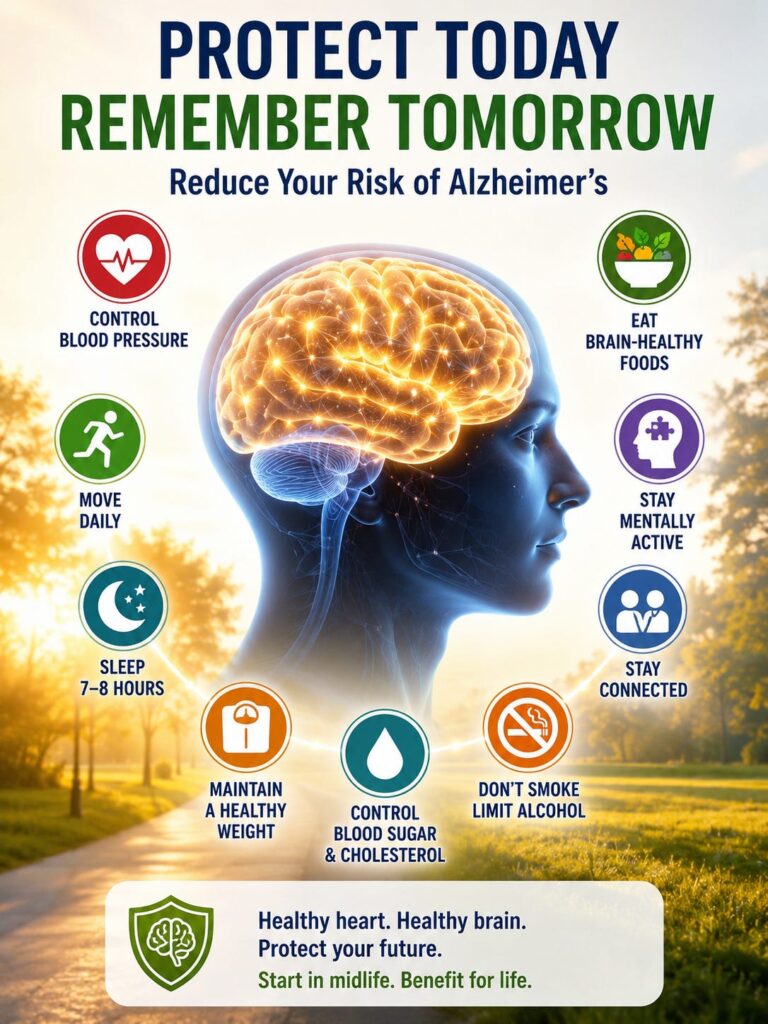
The brain is downstream of the heart. The same walls, the same pressure, the same inflammatory soup. When a patient asks me how to protect their memory, I don’t send them to a neurologist first. I check their blood pressure.
The internet has discovered this too, all at once. Your feed is now full of APOE4 threads, red-light helmets, peptides, and confident men promising that “almost half of dementia is preventable.” Some of it is the best public-health message of the decade. Some of it will separate you from your money and your judgment.
Let me give you both: the system that actually works, and the filter to tell the signal from the noise.
First, the one reframe that changes everything
If you carry APOE4 — the gene everyone is suddenly talking about — you did not receive a sentence. You received a change in the odds. Roughly one in five people carries at least one copy. One copy raises late-onset Alzheimer’s risk meaningfully; two copies raise it a lot more. And yet enormous numbers of ε4 carriers live long lives with intact minds. The gene loads the dice. It does not throw them.
Here is the fact that should reorganize how you think about this disease: the Alzheimer’s that appears at 70 often began its work at 40. The cascade runs slow and quiet — midlife vascular and metabolic injury, then inflammation, then amyloid, then the spread of tau, then, decades later, the failure of the synapses you were using to read this sentence.
That timeline is not depressing. It’s the whole opportunity. You may not be able to knock over the first domino. You have twenty or thirty years to slow every one that follows.
How to read the discourse without getting played
Before the protocol, the filter. Because you’re going to be sold a lot of things.
What the loud accounts get right — and they really are right:
-
Prevention is midlife work. Not something you start at your first missed name.
-
APOE4 is common and almost nobody tests for it. You have to ask.
-
Lifestyle is not “cope.” The Lancet Commission, the U.S. POINTER trial, and the walking-and-tau data are real, peer-reviewed, and large. Dismissing them as soft is the actual anti-science position.
-
Heart health and brain health share the plumbing. This is the truest sentence in the entire conversation, and I say it as the guy who works on the pipes.
What the same accounts oversell:
-
“Almost half of dementia is preventable” as a personal promise. The real figure — about 45% of cases worldwide, across 14 risk factors — is a population estimate, what might happen if every one of those factors were erased from every life on earth. It is the best prevention map we have. It is not a coupon for 45% off your personal risk.
-
One diet as destiny. Meat versus plants is not the ballgame.
-
Peptides, gadgets, and psychedelics before blood pressure. If your biohacking budget has a red-light panel in it but your systolic is 145, you have been played.
-
“Amyloid is dead.” The 2022 research-fraud scandal wounded a lot of trust, and it should have. But amyloid didn’t stop being part of the pathology because one paper was faked. It’s part of the story. It was never the whole story.
Keep that filter in your pocket. Now here’s what to actually do.
The system: boring, vascular, and overwhelmingly effective
1. Measure the board
You cannot manage what you refuse to look at. Do this once, then repeat the bloodwork yearly.
Genetics and family: APOE status (ε2/ε3/ε4), and a first-degree family history of dementia, heart disease, and diabetes.
The vascular-metabolic dashboard — the one that actually matters:
-
Home blood pressure, measured over several mornings. In midlife, aim closer to a systolic of 120 than to “normal for your age.”
-
ApoB (a better number than LDL-C alone), plus LDL-C, triglycerides, HDL.
-
Fasting glucose, HbA1c, and fasting insulin or HOMA-IR.
-
Waist circumference and body composition — not just BMI.
-
hs-CRP if you want an inflammation snapshot.
Brain-adjacent: a hearing test, an eye exam, a dental and gum check, and a sleep-apnea screen if you snore or wake tired. Optionally, with your physician, the newer p-tau217 blood test.
Nobody screens APOE by default. Nobody. You have to be the one who asks.
2. Movement is the highest-ROI drug I know
In November 2025, Nature Medicine published one of the cleanest human studies on this we have — the Harvard Aging Brain Study followed nearly 300 cognitively healthy older adults for up to 14 years, with pedometers and repeated brain scans. The results are worth memorizing:
Daily stepsEffect in people with elevated amyloid3,000–5,000~3-year delay in cognitive decline5,000–7,500~7-year delayAbove ~7,500Benefit plateaus
Read those numbers again. Walking bought people years. And here’s the mechanistic beauty of it: exercise didn’t lower amyloid at all. It was linked to slower accumulation of tau — the protein that actually seems to drive the damage. You may not be able to clear the kindling. You can slow the fire.
The 10,000-steps number was always a marketing figure from a Japanese pedometer company. You don’t need it. You need to not be sedentary.
The prescription: floor of 5,000 steps most days, target 7,000–8,000. Add 150+ minutes a week of zone-2 cardio (the pace where you can talk but not sing), and 2–3 days of strength training. Muscle is metabolic insurance.
3. Sleep is the brain’s dishwasher
Deep sleep is when the glymphatic system — the brain’s overnight cleaning crew — flushes soluble amyloid out. The evidence for protecting sleep is far stronger than the evidence for any sleep supplement you’ll be sold.
Seven to nine hours, on a consistent schedule. Treat sleep apnea aggressively; it’s a double hit, both vascular and cognitive. And if you fix only one nighttime thing tonight: cut the evening alcohol. It fragments exactly the deep-sleep stage you’re trying to protect.
4. Metabolic and vascular health — the main event
Type 2 diabetes travels with substantially higher Alzheimer’s risk. Some researchers call the disease “type 3 diabetes” for a reason: same arteries, same insulin-signaling failure, same inflammation. The brain is the end organ.
So argue with your doctor, if you have to, for these: no diabetes (and if you’re prediabetic, reverse it); ApoB and LDL treated like cardiac prevention now, not waited on until you’re 70; blood pressure controlled in midlife, not after a stroke; visceral fat down.
Lipids used to be a heart target. They are now a brain target too.
5. Food: get the pattern right, then worry about your genotype
The best-supported eating pattern remains Mediterranean / MIND — vegetables, berries, extra-virgin olive oil, fish, legumes, nuts, and as little ultra-processed food as you can manage. Start there. That’s 90% of the win.
Now, two APOE4-specific wrinkles — and I want you to hold these as hypotheses, not commandments:
-
Meat may not be the enemy it’s made out to be for ε4 carriers. A March 2026 study in JAMA Network Open, following a Swedish cohort of more than 2,100 adults for 15 years, found that higher meat intake was associated with slower cognitive decline and lower dementia risk — but only in people with the ε3/ε4 and ε4/ε4 genotypes. Processed meat looked worse for everyone. This is one observational study. It does not overturn Mediterranean eating. The reasonable synthesis: unprocessed meat, fish, and eggs can live comfortably in an ε4 diet; processed meat should not.
-
Alcohol is not neutral for you if you carry ε4. The gene is tied to earlier weakening of the blood-brain barrier, which means alcohol lands harder on your brain than on your neighbor’s. The honest default is little to none.
6. The “soft” stuff that isn’t soft at all
Sensory and social inputs sound like wellness fluff. They are among the most cost-effective interventions in the entire Lancet list.
-
Hearing aids if you have loss. Hearing loss is one of the single largest modifiable factors, and it doubles as a shield against isolation.
-
Correct your vision. Cataracts and bad glasses are a fixable dementia risk.
-
Stay socially obligated. Not “have friends” — obligated. A standing appointment, a club, a family role, a volunteer shift you’d feel bad missing.
-
Do genuinely hard cognitive work. Language, music, a complex job, deliberate learning. Not crossword apps. Real difficulty.
The U.S. POINTER trial — 2,111 at-risk older adults, published in JAMA in 2025 — showed that a structured multidomain program (exercise, diet, cognitive and social challenge, health monitoring) beat a self-guided version on global cognition. Crucially, the benefit held across APOE4 carriers. Structure beats vibes. A plan you follow beats a better plan you don’t.
7. Cheap extras with a real signal
Floss and treat your gums — chronic periodontal inflammation for thirty years is a genuinely dumb risk to carry. Run a HEPA filter and stay indoors on high-AQI days. Wear the helmet; protect your head. And eat fatty fish, because ε4 carriers transport DHA into the brain less efficiently — test an Omega-3 Index if you want to be precise about it.
The frontier stack: interesting, weaker, easy to overrate
Here is where the internet loses its mind and its money. I’ll rank these the honest way — by evidence, not by how futuristic they sound.
-
Near-infrared / photobiomodulation (”red light for the brain”). Early small trials in people who already have mild cognitive impairment are intriguing. There is essentially no evidence it prevents anything in healthy carriers. Reasonable to watch. Not first-line. Not before your blood pressure.
-
GLP-1 drugs. Observational data hint at lower dementia risk, but a major oral-semaglutide trial failed to slow decline in early Alzheimer’s. Prevention is not the same as treatment. If you already qualify metabolically, consider it a possible bonus — not a reason to start.
-
Cerebrolysin, peptides like Semax, rapamycin. Research territory or non-U.S. clinical traditions. Not DIY protocols.
If a number on your dashboard is off — blood pressure, ApoB, A1c, apnea, hearing — fixing that with your physician is worth more than every device in this section combined.
The 12-week plan, if you carry ε4 (or just want to be serious)
Weeks 1–2 — instrument the board. Get your APOE status if you don’t know it. Pull labs: ApoB, A1c, insulin, a full lipid panel, and a blood-pressure series. Book the hearing, vision, and dental checks. Screen for sleep apnea if there’s any hint. Wear a step tracker and learn your real baseline.
Weeks 3–12 — lock the four floors:
-
Steps at 7,000+ most days.
-
Three strength sessions, two cardio, weekly.
-
Sleep 7–9 hours, no late alcohol.
-
A Mediterranean-style plate, unprocessed protein you tolerate, ultra-processed food and cigarettes gone.
Also schedule: one recurring, non-optional social commitment; one cognitively hard hobby; and a blood-pressure and waist recheck at week 12. If a number is off, that’s your first appointment.
The bottom line
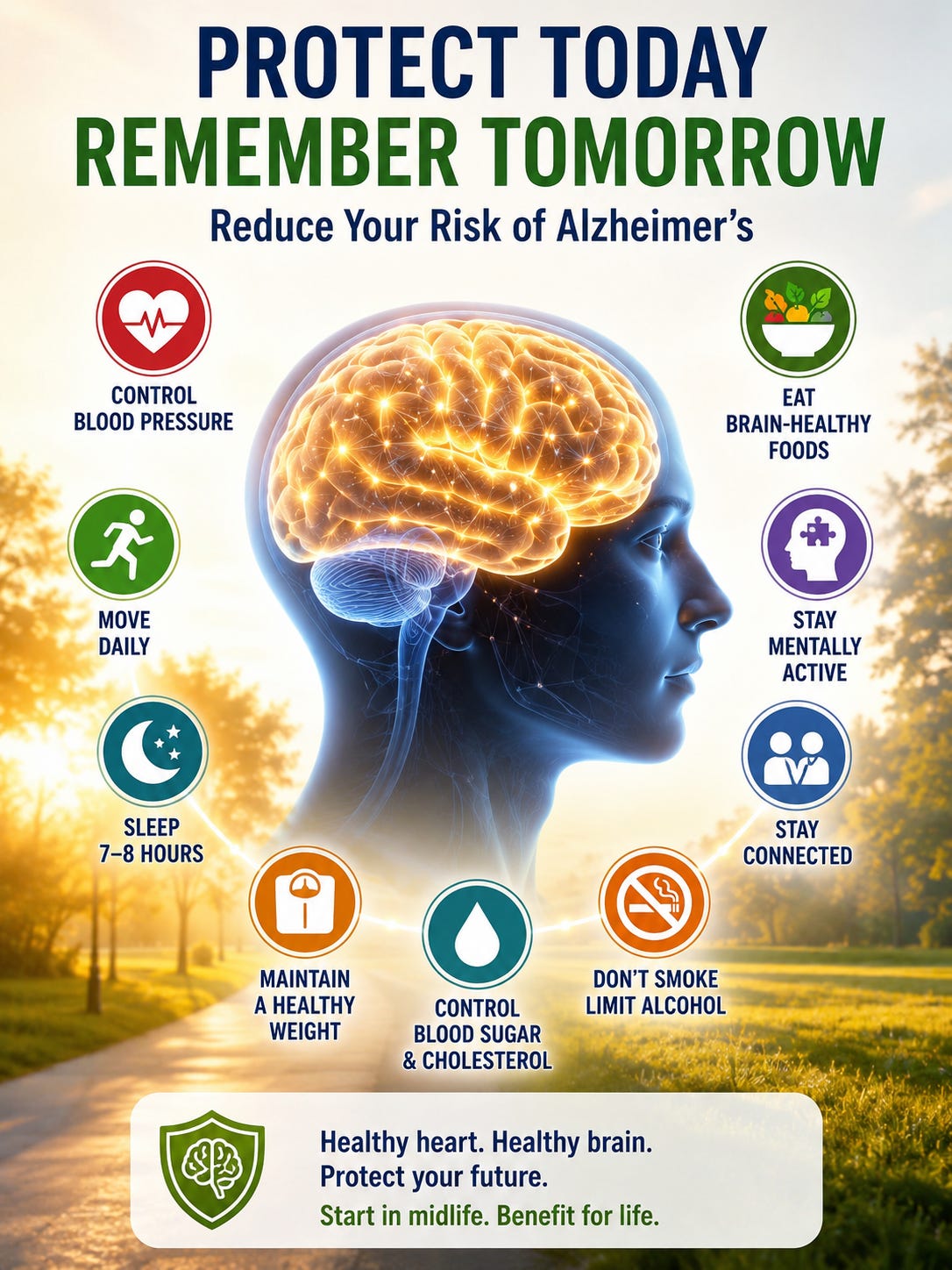
The most powerful things you can do for your brain are the least glamorous things I do for your heart. Move a lot. Sleep deeply. Keep your metabolism honest. Control your blood pressure. Use your mind hard. Take care of your teeth. Watch the frontier with interest and your wallet closed.
APOE4 changes the odds. It does not write the ending. And the pen, for once, is largely in your hand — starting a couple of decades before you think you need it.
Go get your blood pressure checked. Today. That’s not a metaphor.
Blessings.
Afshine Ash Emrani, M.D., F.A.C.C.
Assistant Clinical Professor, UCLA
David Geffen School of Medicine
Join Our new website
Castle-Connolly Nationwide Top Doctor (Since 2008)
Los Angeles Magazine Super Doctor (Since 2010)
LA Style Magazine Top 100 Doctors in America (2024)
Subscribe to mynewsletter: substack.com/@afshineemrani
Explore my books: Amazon Author Profile